 Kiket docs
Kiket documentation
Operational compliance twin — model policy, observe reality, and prove the gap with evidence.
Kiket is your operational compliance twin: it models how you must operate, ingests operational events, builds an evidence graph, runs compliance scanners, and produces audit-ready reports.
Sign-in and accounts
Email, Google, GitHub OAuth, and account linking.
Start here
Connect a process, ingest events, and reach your first finding — about 10 minutes.
Operational loop
Raw inbox → evidence → scanner → finding → remediation → audit snapshot.
Billing and plans
Organization plans, usage limits, Stripe checkout, and metered overage.
Three ways to work
No-code canvas, low-code YAML, all-code API. Same platform, different on-ramps.
Build
Processes, cases, evidence, scanner runs, remediation, and git-backed `.kiket/` configuration.
API & SDKs
REST reference, language SDKs, CLI, MCP server, webhooks.
Integrations
GitHub, Slack, Jira, ServiceNow, and generic webhook adapters.
Compliance
Findings, audit reports, optional anchoring, and data export.
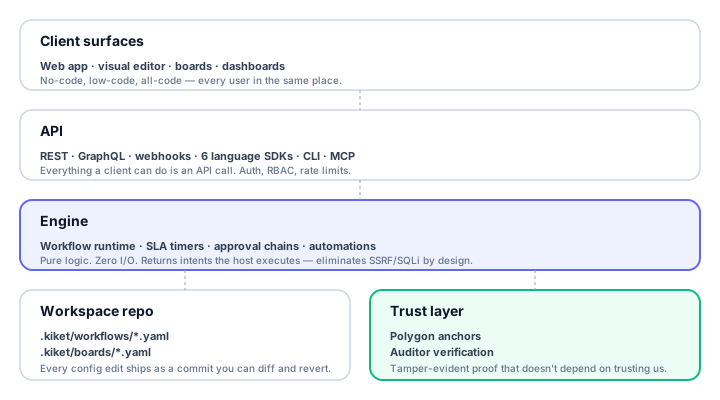
What is Kiket, in one diagram?
Pick your path
Start with the Quickstart and Operational loop to see the closed loop in about 10 minutes. Then read Core concepts and Compliance to check fit.
Follow Build your first monitored process, then browse Build for each primitive. Start from Definition packs for flagship compliance demos.
Jump to API & SDKs for language quickstarts, or install an Integration and route webhooks into the raw inbox. Build a custom adapter with Your first evidence adapter.